I’m a genius at the end of cleaning day
May 16, 2013 § 15 Comments
My husband had barely gotten his foot in the door last Tuesday when I pounced. I grinned up at him, “I learned how to do podcasts today!” I could feel my whole body sparking with excitement.
He looked at me blankly, suitcase in hand. Like most of the world, he discovered podcasts years ago. “You mean you learned how to make one?” he asked.
My shoulders drooped a little and he tried to hide his smile. “Or you learned how to listen to them?”
“Well, I learned how to download them onto my phone, too.”
That day, I had listened to Terry Gross interview David Sedaris while I ironed. I thought about the first time I heard David Sedaris on the radio, singing “My bologna has a first name, it’s O-S-C-A-R” in his Billie Holliday voice. I stopped ironing and wrote the story down. When that piece ended, I listened to Terry interview Barbara Natterson-Horowitz, author of Zoobiquity: What Humans Can Learn From Animal Illness. During their conversation, they discussed the topic of fainting, which was riveting to me, especially as a fainter who is writing a story about fainting. They discussed fainting (also known as syncope) in the animal world – that fear can trigger not only fight or flight as an anti-predation response, but also fainting – and how the syncope response could have evolutionary benefits. I took notes for my story then packed up the ironing, which I had finished.
I loaded up my phone with more Fresh Air episodes, then added RadioLab episodes, and This American Life episodes. For Wednesday was cleaning day.
The following day, while I scrubbed bathtubs and sinks, I listened to This American Life, to a young man’s journey across the country on foot, pushing his backpack in a baby stroller across the desert, asking folks along the way, “If you could go back and, taking all of what you’ve learned in your life, tell your 23-year-old self something, what might you say?” On Radiolab, I listened to a longtime believer suddenly lose his faith in God while I swept and mopped, and I learned about a deaf man who lived without language – no sign language, no lip reading – into his adult life. He finally learned language as a grown man, learned that a table has a name – it is named “table” – and he fell in love with words like I fell in love with my husband. The Words episode of Radiolab is possibly my favorite podcast so far.
At the end of the day, my mind felt invigorated, and I swear my IQ jumped 15 points.
This Wednesday, I discovered Book Riot’s new podcast, and while I cleaned the stove, I listened to BookRiot.com editors Rebecca Schinsky and Jeff O’Neal discuss The Great Gatsby hype and the publishing strategy of female authors using initials instead of their full names so that men won’t automatically dismiss their titles as “women’s lit.” While I cleaned bathrooms I listened to the Surgery 101 team explain how to avoid fainting in the OR. While I swept and mopped, I listened to Lee Gutkind describe the Creative Nonfiction movement. While I made salsa, I listened to Natalie Goldberg read from her new book, The Great Failure, and while I set the table I listened to Dinty W. Moore discuss “Writing it Short: The Guide to Brevity.”
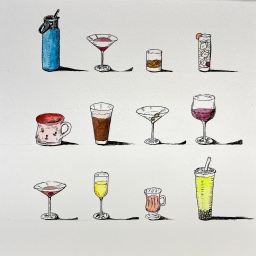
Now, I’ve got a good 13 podcast episodes lined up for when I work out, for when I fold laundry, for when I unload the dishwasher. For when I shake a cocktail at the end of cleaning day to celebrate my budding genius.
—————
Here are the podcasts I currently subscribe to. Show descriptions are lifted from their About pages. I’m still looking for great podcasts, so if you have any favorites, please share them in the comments. Thanks!
All Songs Considered: All Songs Considered is home to the best new music and a community of fans always ready to share their opinions on the current music scene.
Bookrageous: Serious about books…but not exactly serious.
Book Riot: A weekly news and talk show about what’s new, cool, and worth talking about in the world of books and reading, brought to you by the editors of BookRiot.com
Fresh Air: Fresh Air from WHYY, the Peabody Award-winning weekday magazine of contemporary arts and issues, is one of public radio’s most popular programs. Hosted by Terry Gross, the show features intimate conversations with today’s biggest luminaries
Podlit: A podcast devoted to the creative nonfiction genre and other aspects of the literary world. It’s the podcast for writers, readers, students, teachers, and anyone else seeking the newest reports and latest discussions of the literary and publishing industries. Brought to you by Creative Nonfiction Magazine.
Radiolab: Radiolab is a show about curiosity. Where sound illuminates ideas, and the boundaries blur between science, philosophy, and human experience.
This American Life: This American Life is a weekly public radio show produced by Chicago Public Media and distributed by Public Radio International.
The Writer’s Almanac: Daily poems, prose, and literary history with Garrison Keillor
When nature is allowed to be nature
May 14, 2013 § 5 Comments
“Oh my God, a lady’s slipper!” I pulled the camera out of my pack as I raced to the side of the road. I crouched down and snapped pictures as our nine year old son giggled.
“I guess Mom likes lady slippers,” he said.
I looked up and saw two more lady’s slippers, and then another one across the street. I zigzagged back and forth and shot 20 frames in the first five minutes of our hike. We hadn’t even made it to the trailhead yet.
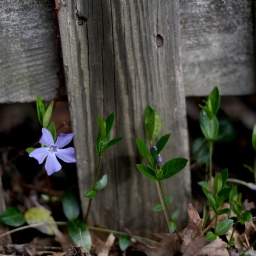
The forest at the bottom of Old Rag Mountain was lush with the apple green of spring. Every shrub, every tree, had leafed out, and in their newness, no matter the species – oak, birch, maple – the leaves were identical shades of peridot. It was mid May, and we had hit Shenandoah at the peak of spring’s grandeur. Everywhere we looked, the forest floor was sprinkled with wildflowers.
My husband paused on the trail as I shot a close up. He looked out into the sea of green, then at me, photographing yet another tiny detail – a flower, a stone, a mound of moss. “Can you get a picture of the whole forest?”
“Sure,” I said. “It’s kind of hard to get a clear shot, though.” I usually can’t see the forest for the trees.
“I don’t care.” He gazed into the green. “I just like the forest here.”
We continued up, and up, and up, stepping over millipedes, pressing our palms to boulders, burying our faces in mountain azaleas to inhale their honeysuckle scent.
“Dad, can we climb this rock?” We had been on the trail for an hour, but we still had a long way to go. The hike was going to be about six miles round trip, which would be the longest distance our kids had ever done. More than that, the final ascent was going to be extremely technical, with lots of bouldering. My husband looked worried. He checked the sky for the thunderclouds that were expected to roll in. The exposed rock scramble at the top would be a treacherous place in a storm.
“I think we should keep moving,” he said. “You guys need to save your energy. This is going to be the hardest hike you’ve ever done.” He checked the sky again. “There are going to be plenty of rocks to climb at the top.”
We had gotten an early start – we woke with the sun and were out of our tent by 6:30 am, boiling water for oatmeal and coffee. At 8 o’clock we were already on Skyline Drive, on our way to the trailhead. So other than the threat of storms, I wasn’t too concerned about time. I hiked at the back and stopped frequently to snap pictures. The diversity on the trail was irresistible, and I wanted to photograph it all.
“Andrea, is it okay if we don’t wait each time you stop? I don’t want to ruin everyone’s fun, but I really think we should get to the top, and then we can take our time on the descent.”
I shot one more closeup then put my camera away, “No, you’re right. I can take pictures on the way down.” I vowed to keep my camera stowed, and started hiking at the front, a little ahead of the family so that if I wanted to stop for a photograph, they could catch up while I shot. Not ten minutes later, I had my camera out again.
“Look at these flowers! They look like bells!” My son, then husband, then daughter hiked by. I passed them a few minutes later when they stopped for water, hiked ahead, then had my camera out again. “Look at all this trillium! There’s a whole hillside of it!”
My son laughed as he passed me. “You’re not doing a very good job of keeping your camera put away, Mom.”
When we arrived at (what I now realize is) the famous rock scramble, I was glad for my husband’s prodding. I was blissfully ignorant about the hike – I hadn’t looked at the map or read anything about it – and as we lowered our kids into crevasses and watched them clamber over stones that curved toward a 3000 foot drop, I realized it was probably a good thing that I hadn’t. I would have seen things like this, from the National Park Service website:
Old Rag is Shenandoah’s most popular and most dangerous hike. The number of blogs and websites about this hike attests to its popularity. The number of search and rescue missions each year attests to its danger.
Our seven year old daughter was a natural on the rocks. She found her own hand and foot holds, and her tiredness (read: boredom) from the three mile (so far) hike vanished as she scrambled over gray granite. Our son accepted our help more often, and said it was “a little freaky” as he squeezed between 8 inch cracks in mountain stone, or jumped from one car sized boulder to another. The further we climbed on the stone, the more nervous I got about our descent. Getting up the rocks was hard enough – getting down them could be perilous. My husband and son were concerned about the descent too. Yet we continued to climb.
Despite our height (and my nerves), the rock scramble was a grounding experience. I was connected to the earth up there, dependent on it, with my bare hands on rough granite, my hip against a boulder, my heart pressed to stone. When we finally reached the peak, after several false summits, I was exhilarated by the mountain under my feet and the big sky above, by boulders perched at the top of the world, by gentle rain falling from a blue sky. There were no thunderclouds in sight, and we had made it to the top. I surveyed a 360 degree view of the vibrant green of Appalachia in sunlight, an unmarred view of spring’s progression up the mountain sides – a profusion of apple green in the valleys thinning to brown bare branches at 3000 feet. And there wasn’t a building in sight. Just forest and rocks and mountains.
We high-fived the kids, and hugged them, and told them, “You are the coolest kids EVER. Look what you just did!” My husband told them, “You can have as many s’mores as you want tonight. You can eat them til you puke if you want to.” Our son shouted “YEAH!” and jumped from one boulder to another at the top of the mountain, while my heart jumped into my throat.
Their dad and I discussed our options while the kids ate granola bars and the wind whipped our windbreakers against our skin.
“Is there another way off the mountain?” I asked. “That scramble is going to be really tricky on the way back down.” Our son had been pretty freaked out on the descent off of only one rock at Dragon’s Tooth in Blacksburg. There were scores of boulders to navigate here. And to be fair, I wasn’t excited about descending the scramble either.
“There’s another way down, but it’s five miles,” he said. Crap. That would add up to nine miles. Double the distance the kids are accustomed to doing.
“I want to go the long way,” I said.
“Me too,” said our son.
And so we did.
Near the bottom, our daughter took my hand and said, “We saw a lot on this hike today.”
“Yeah, we saw lady’s slippers, and mountain azaleas, a hillside of trillium, and those wild geraniums you like,” I said. She had one of those tucked into her pig tail.
“And dandelions,” she said. “And a waterfall.”
“And those cute little white flowers, and the violets, and boulders perched on mountain tops, and spring climbing the forest. It’s amazing how pretty it can be when we don’t build all over everything. When we just allow nature to be nature.”
Our son nodded, a happy smile on his face. “I like it when nature is allowed to be nature.” And after nine miles that were supposed to be five, after climbing to an elevation of 3291 feet under his own power, after five hours of hiking, he ran off down the trail.
Blogkeeping
May 13, 2013 § 11 Comments
After my recent post regarding rejection, and how my heart flutters with each new email in dread of the next “So Sorry,” I was very excited to receive two emails last week that did make my heart jump, and in a good way. The first was an acceptance note. Brevity Magazine’s Nonfiction Blog picked up one of my pieces and has republished it. Check out Why Description Matters to the Brain on Brevity’s blog, edited by Dinty W. Moore. (Interesting aside: Brevity and I share the same Oulipo blog theme. Grayscale, minimalist, word-focused. Pop of orange. In (an) other word, Awesome.) On the heels of the email from Mr. Moore, I received an email from Cheri Lucas Rowlands, an editor at WordPress.com, that she planned to include my site on the WordPress.com News blog. Sure enough, yesterday morning I saw my drunken snow day graph on A Special Sunday: A Mix of Mother’s Day Blogs. Big thanks to Mr. Moore and Ms. Rowlands for making my week. If you are a new reader and you found me through the Brevity or WordPress blogs, welcome! I’m very glad to have you here.
In other news, whether you are new here or you’ve been here a while, if you look to the left on your screen (or under “Menu” on your mobile), you’ll see some new features that I’ve added to Butterfly Mind. One is a Table of Contents (of sorts). I’ve yet to figure out a way to make my site more easily navigable, and since I’d rather write than get lost in a rabbit hole of blog design and drop-down menus, I decided to whip up this table of contents instead. It catalogs my first 100 blog posts by title and includes a favorite word from each post. The entries are in chronological order, beginning at the top with the very first post in June of 2012.
I have also added a Guestbook. Whether you’re a regular here or if you’ve just arrived, please feel free to say hi. I love to know where you’re from, what brought you here, what you like to read and write.
And finally, if you’d like to connect on Twitter, my handle is @andreabadgley, and on Facebook, my page is facebook.com/andreabadgleybutterflymind. I haven’t joined LinkedIn, but I hear I should.
Thanks for reading,
Andrea
For Mom
May 12, 2013 § 10 Comments
With every sock
I turn
right side in
down in the basement
sorting laundry,
Vowing I’ll make the kids turn their own socks
And knowing I won’t,
I appreciate my mother.
With every attempted paperback
on the couch
on my back
on a Saturday,
Our daughter asking questions
Interrupting
til I put the book down,
With every
“What’s for dinner?”
and the grumbles
when I answer
after hours of
brainstorming menus, shopping for food, unloading groceries,
preparing home cooked meals,
I sympathize with my mother.
With every hard question -
“What happened to the squirrel after it died?”
“Why is it mostly Moms who stay home?”
I ache for my mother
perched on the edge of my white daybed,
hands clasped as she tried to answer,
“Who wrote the Bible?”
“If Adam and Eve were the first people, where did their son’s wives come from?”
With every loud sigh I expel
or cabinet I slam
Buying time to discern the right thing to do,
With every tough punishment
that leaves our kids in tears
And the guilt I feel
for making them cry -
They trust me,
They want my approval,
They want me to see them as perfect -
I understand my mother.
With every laugh at the dinner table
That builds til I can’t stop
and tears stream down my cheeks,
and my jaw and face hurt
from smiling so hard,
I am thankful for my mother
Who taught me well.
I love you Mom! Happy Mother’s Day!
Writer’s Block
May 8, 2013 § 8 Comments
I have officially run out of story ideas. A friend of mine has encouraged me to submit work to the Southern Women‘s Review, and as the deadline approaches, I find myself creatively crippled.
I am a Southern woman, born in the South, raised in the South, and after a few years in the not-South, we have settled down in my motherland and will raise our children in the South. Anything I write, then, is fair game for this journal: “Submissions should be from women who were born in or grew up in the U.S. South; currently live in the U.S. South; or write about the U.S. South.”
But that’s not enough for me, to be a born and bred Southerner and to currently live in the U.S. South. I feel like I should write about the South, about how I never felt like I fit in as a Southerner growing up (I didn’t like sweet tea, for one), but when I moved away and folks sincerely thought the South was like Deliverance, that if they stopped their cars in the southeast they’d risk violent rape by toothless bumpkins, I defended my home against their ignorance and developed a fierce pride for my region. Or I could write about how I didn’t understand the South for so many years of my young life – Southern pride, the clinging to Dixie flags, the continued obsession with the “War between the states” – and how Gone with the Wind (the book, not the movie) explained my heritage and helped me understand Southern culture better than any history class ever could. Or maybe I should write about my experiences as a Southern woman who explored other regions, who has lived in other parts of the country and loved them, but how it still feels like a homecoming to move back to Virginia, even though I’ve never lived here.
Or maybe, I could write about my childhood in the South. About my Grandaddy and Nannie’s farm in Eatonton, Georgia. Where we dug worms from the wet soil of the creek bank, in the shade, by the old mill on their farm, then threaded them, still squirming, on our hooks to catch yellow-bellies in Crooked Creek. Where a trip to the hardware store with Grandaddy, in his old silver Ford pick-up truck with a shiny black steering wheel knob and the shifter on the steering column, was the highlight of our visit when we’d stay a whole week. Where we dug potatoes, and planted carrots in neat rows, and shucked corn and snapped peas under the walnut tree by the tractor shed. Where in the morning I’d say, “Wait Grandaddy! I’m coming with you,” while I hurried to put on my Nannie’s boots to walk through the dewy grass, past the scuppernong vine, and the gourd birdhouses, and the peach orchard, to the compost pile behind the barn. Where Nannie had a plaque on the wall that said “The only way to kill time is to get busy and work it to death.” Nannie, who’d grin and say “Scat!” when we’d sneeze, or “Skin the cat,” when my brother would peel off his sweaty shirt from working in the stagnant middle-Georgia heat. Nannie who worked crossword puzzles, and made cornbread stuffing, and raised three kids while Grandaddy flew bombers in the wars.
Or my mind goes back to Grandma and Grandpa’s house on 6th Street, East Beach, St. Simons Island, Georgia. Grandma with her pretty pastel pillow mints in a crystal dish on the sideboard, with the $2 she left under our pillows when we’d visit, with bottles of Rolaids on every end table, between all the couch cushions, tucked in the cushions of each chartreuse chair, where nowadays someone’s cell phone would fall, and get lost, and be found when the chair suddenly vibrates under someone’s bottom, surprising them so that their eyebrows shoot up and their mouth forms an “O.” Grandma, who introduced me to A Clockwork Orange, her favorite vinyl record, with that strange and wonderful white cover, with a man in a bowler hat and one set of false eyelashes who smiled an enigmatic smile as he emerged, dagger in hand, from a black triangle. Grandma who taught me how to brush my teeth with my finger when I forgot my toothbrush, who had a rosebush by her front door, and who’d give me scissors and a vase when I asked if I could cut pink roses for her. Grandma, who said “You all” instead of “y’all” in her sophisticated, old money, soft Southern drawl.
And Grandpa in his seersucker suit, quiet, always smiling, who’d disappear to his room upstairs, full of light and warm salty air, with a clear view of the dunes, and the wide tan beach, and the distant sound of waves swishing over sand. Grandpa who had a podium up there, with the biggest dictionary you ever saw, and an old black and white TV with a rabbit ear antenna and a knob that you turned with a satisfying click to change the channel. And Grandpa’d come back down with a handheld wooden maze where you’d have to deliver the tiny silver bead from one end to a hole in the other. Or with a wooden puzzle cube that we’d pull apart and spend hours trying to put back together. Grandpa, a career diplomat, who earned his law degree after his three sons had grown up and moved away, who was scorned as a young man by Grandma’s parents (for being poor) until he started working for the State Department, when his now proud mother-in-law began submitting his and Grandma’s travels to the Atlanta Journal’s Society pages. Grandpa, who loved Heavenly Hash ice cream, who smiled and waved at us, the grandkids coloring quietly on the green shag carpet, during the evening hours when Grandma would settle in with her gin and milk to talk politics with her sons and their wives.
But those are just descriptors, right? Childhood memories of an aging Southern woman who has returned to the South. There’s no plot. There’s no story there. So here I sit, wondering what I will write.
“Writer’s Block” originally appeared in volume 6 of Southern Women’s Review (January 2013).
Completing work: the submission process.
May 7, 2013 § 13 Comments
Work never sent out is never finished. Hidden from the world it remains safely (and sadly) on the writer’s shelf. – Priscilla Long
I wrote recently that I altered my writing practice one morning – I sat by a window and penned thoughts on paper rather than staring into a pixelated screen and clacking keys on a keyboard – and the shift electrified me. It shuffled my synapses and portended a heightened level of productivity.
Since that day, I shifted my focus to not just producing more and more new work, but to doing something with all the words I’ve already written. I bought a copy of the 2013 Writer’s Market and devoured the first 180 pages in one sitting. I learned about query and cover letters, how to format a manuscript, how to negotiate contracts, track submissions, build an author platform, use LinkedIn. Then I scanned 400 pages of submission guidelines for consumer magazines, trade journals, and writing contests, highlighted titles that my work might fit, and marked pages with paper clips.
I browsed our library’s periodicals and checked out back issues of magazines to familiarize myself with the work they print. I ordered introductory issues to The Sun and Creative Nonfiction, journals our library doesn’t carry. I studied content on online journals like Brevity, who publishes brief, concise literary nonfiction (less than 750 words) and is happy to work with budding authors.
Then? I began the work of submitting. And have reaped the heightened level of productivity my pen and ink session activated. In the past two weeks I have submitted five manuscripts to online and print magazines, two to my critique group, and one to a blog I follow. And I’ve got four more queued up.
Meanwhile, I check email obsessively, wondering about a manuscript I sent out nearly 6 weeks ago. Waiting for the note that says, “We’d like to publish your work.” To my surprise, the first email I received was not about that 6-week old submission. It was about a piece I sent barely a week ago.
And it was a rejection. I received my first rejection this morning. I felt strangely calm about it as I entered today’s date in the “date returned” column of my submission spreadsheet. Maybe because I’ve known all along that this is part of the process. Writers probably write as much about rejection as they do about writer’s block, and before I began my submission process, I read a particularly entertaining piece by Alexis Paige on The Rumpus – Rejection Sucks and Then You Die: How to Take a Dear Sad Sack Letter (and Shove it). Paige, and every writer I’ve ever read, talked to, shared a critique room with, has prepared me for this first of what will be many rejections.
So though my heart flutters with every new email I receive, now dreading the next “So sorry,” rather than anticipating the “Congratulations” I originally hoped for, I will keep submitting. Today, I will buy envelopes so that I can mail a manuscript to a publication that does not accept submissions online or by email. I will continue through my queue.
I will complete my work.
The people I see on a Saturday morning
May 5, 2013 § 7 Comments
One of my favorite things about living in a college town, now that I am a mom instead of a student, is running errands on a Saturday morning. After a cup of coffee and the paper, I hit the street around 10 or 11 AM, when I’ve been awake for three hours, but the town is just rubbing its eyes after its Friday night revelry. The scenery tickles me with every Saturday morning sojourn.
It’s 10:30 am. On my way home from the grocery store, where I bought popsicles for the kids for the first warm days of spring, I see a beefy young man strolling down the sidewalk in baggy gray sweatpants, flip flops, and no shirt. His chest is bare, not because he just finished up a run – his eyes are crusty (and he’s wearing flip flops) – but because he rolled out of bed cotton-mouthed and hungover, and he needed juice. He’s walking home now, sipping the Snapple he bought at the 7-Eleven. The April sun feels good on his skin, but it hurts his eyes.
Another day, on our way out of town – it’s 11 am and we are taking the kids on a wildflower hike – we drive along fraternity row, where young men move in slow motion under apple-green leaf buds. They lean over slowly, gingerly, on a Saturday morning and pick Friday night’s debris off the grass. On the front lawn of one frat house, a sophomore slouches over his garden tool. He rakes beer cans from last night’s party. A more senior brother stands on the porch, his feet firmly planted as he takes the air. He wears pajama pants and a tee shirt, yet stands tall as he surveys the pear blossoms and supervises the sophomore. He has one hand on his hip. In the other hand he holds a bloody Mary.
My favorite scene, though, unfolds at 10:45 am, as I drive to Goodwill. On my way to drop off outgrown kid clothes, I pass The Waffle House. Five bleary-eyed boys, all in maroon Virginia Tech sweatshirts, lay draped over benches like discarded coats. Last night, when I saw boys like them at Food Lion, when I was buying tissues and milk, and they were loading their carts with cheap beer and chips, their eyes were bright and laughing. Now, they are red-rimmed and suffering. Their heads lean on the brick wall, their arms dangle from burgundy sleeves. The Waffle House is full, and they wait their turn for greasy hangover food.
I smile as I drive by, my eyes clear and my head pain-free, remembering those days.